
Summer Writing Grant Profiles
Every summer, the Humanities Institute funds up to four $6,000 competitive Summer Writing Grants for university faculty working in the humanities to complete or make significant progress on a manuscript for a monograph that is either under contract or in which a publisher has indicated written interest.
During the Spring 2026 semester, Madison Burba (WFU ’28), HI Student Communications Assistant, conducted interviews with all of the 2025 grant recipients.
2025-2026 Interviews
Dr. Ebony Flowers
Interview by Madison Burba (WFU ’28)
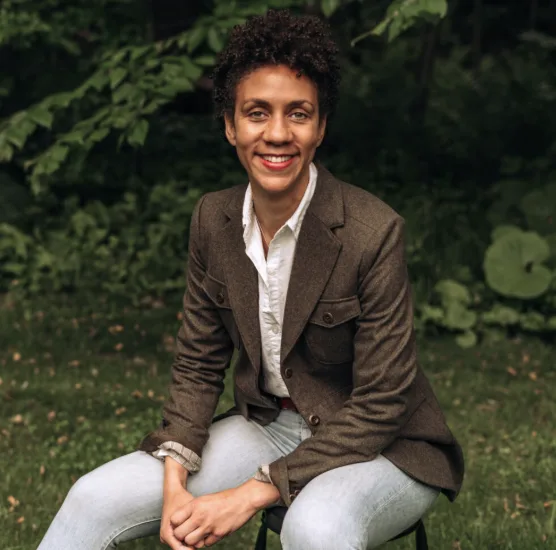
“When I make comics, I only really think about one audience—myself,” she said. “And then I think of one other person, which in this case was my sister. If my sister enjoys it, that’s enough.”
At Wake Forest University, cartoonist and creative writing professor Ebony Flowers is completing a graphic novel that blends family history, urban history, and visual storytelling into a portrait of a Baltimore community.
With support from the Humanities Institute Summer Writing Grant, Flowers spent the summer inking the final pages of Solace Homes, a more than 400-page graphic novel.
“It’s a story about three generations of women who live in a Baltimore neighborhood that’s zoned for mixed industrial use,” Flowers explained. “So that means there’s a community living side by side with heavy industry, and the story looks at the destruction and degradation of the community through caused industrial mismanagement and the city’s negligence.”
Flowers, who teaches in Wake Forest’s Creative Writing program, has built a national reputation as a cartoonist whose work has appeared in publications including The New Yorker, The New York Times, and MoMA Magazine.
The novel has been in progress since 2020, when Flowers began working on the project at the start of the COVID-19 pandemic. Like many long-form comics, it developed gradually alongside other projects.
“Comics take a long time,” she said. “I’ve been working on it on and off since 2020. In between that time I’ve done a lot of short-form comics and other projects, so it’s been something I’ve returned to again and again.”
The story’s fictional setting is inspired by real neighborhoods connected to Flowers’s own family history in Baltimore, communities shaped by segregation, industrial development, and urban displacement.
Her mother grew up in Fairfield Homes, a former neighborhood located near the Chesapeake Bay and wedged between residential housing and heavy industry. Flowers remembers visiting her grandmother there as a child.
“It was a community that lived right next to industry,” she said. “I didn’t know anything about the place or the history of it until I was an adult.”
Her father’s childhood neighborhood had a similarly complex history. The housing development where he lived was originally created for Black World War II veterans during a period when segregation restricted access to housing opportunities. These communities were often under-resourced and later demolished.
“It was deemed dilapidated housing, and the city destroyed it,” Flowers said.
While Solace Homes grows out of these historical realities, the graphic novel itself is ultimately a work of fiction. As the story evolved, so did its central characters. Early drafts focused on a male protagonist, but during the pandemic Flowers made a significant narrative shift.
“At first my protagonist was actually a guy,” she said. “And then I switched it around and made all main characters women. I just really wanted to write about women.”
Rather than trying to anticipate a broad audience, Flowers writes her comics with a singular person in mind.
“When I make comics, I only really think about one audience—myself,” she said. “And then I think of one other person, which in this case was my sister. If my sister enjoys it, that’s enough.”
The Humanities Institute Summer Writing Grant helped move the project closer to completion by providing dedicated time for the labor-intensive process of inking the book’s hundreds of hand-drawn pages.
At the same time, Flowers continues to share her passion for comics with Wake Forest students. She teaches both introductory and advanced courses in making comics, emphasizing that artistic experience is not required.
“A lot of students come into the class thinking they can’t draw,” she said. “But the course is really for people who have little to no formal training in the visual arts.”
For Flowers, comics offer a powerful form of storytelling. With Solace Homes nearing completion, she is already thinking about what comes next: a new collection of fictional short stories centered on caregiving.
Dr. Molly MacVeagh
Interview by Madison Burba (WFU ’28)
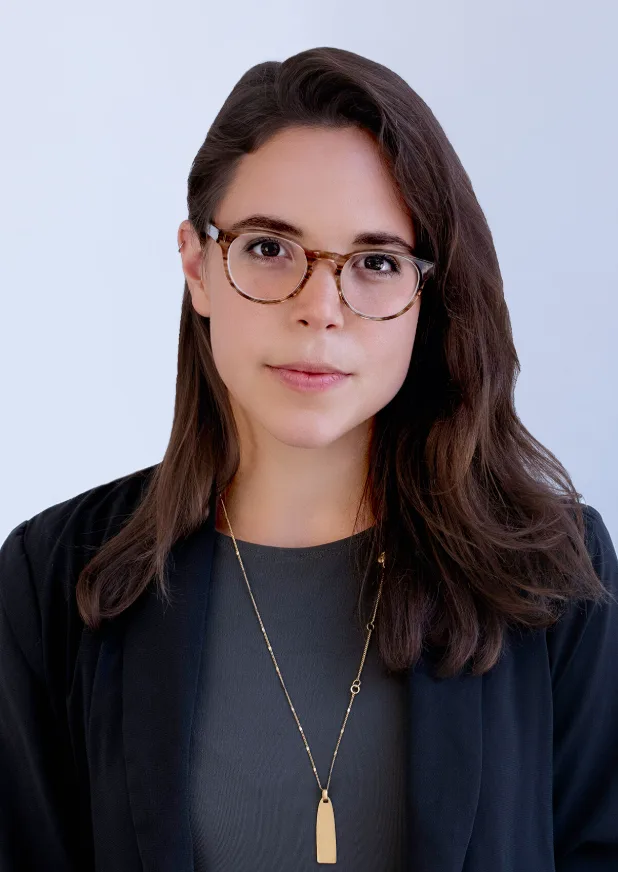
“This project is about how we think about the work of maintaining ourselves and our households against the larger backdrop of a crisis.”
For Professor Molly MacVeagh, literature offers an unexpected way into one of the most overwhelming questions of our time: climate change.
“This large-scale global disaster gets articulated in the contemporary novel through sitting down to dinner with people,” she said, “or through working on a garden or going food shopping and worrying about the chemicals in your kids’ Cheerios.”
With support from the Wake Forest Humanities Institute’s Summer 2025 grant, MacVeagh spent the summer completing revisions on her book project, Novel Metabolisms, which explores how contemporary fiction represents environmental crises through the everyday routines that sustain human life.
A faculty member in the Humanities Program, Maceaugh works at the intersection of contemporary literature and environmental thought. Now in her third year at Wake Forest, she teaches courses on animals, nature and humanity, and modern fiction.
“It’s lots of stuff that’s sort of intersecting with what I research,” she said. “But it’s fun because I get to go in new directions and read stuff that I haven’t read before.”
Her interest in these questions began long before graduate school. As an undergraduate, MacVeagh spent summers working on farms, as a barista, and for food magazines.
These experiences shaped how she understood food not just as a symbol, but as something central to daily life and community. In academic settings, however, she noticed that food was often treated more abstractly as a marker of class or desire.
That disconnect eventually became the foundation of Novel Metabolisms, which examines how novels written after 2000 grapple with climate change.
Rather than focusing on dramatic environmental catastrophe, many of the works she studies approach climate change through ordinary moments. At the center of her analysis is the concept of metabolism, a framework she draws from biology, Marxist theory, and urban studies to describe the constant exchanges between people, households, and the environment.
“The project is about how we think about the work of maintaining ourselves and our households against a larger backdrop of crisis,” she said.
The book began nearly a decade ago as MacVeagh’s doctoral dissertation and has evolved significantly over time. While early versions focused primarily on realist fiction, her research has since expanded to include experimental and speculative works.
“Metabolism was a subordinated concept in the dissertation version,” she said. “Then it became the whole key concept.”
The Humanities Institute grant allowed MacVeagh to dedicate the summer to work with an editor following peer review. After years of working on the manuscript, that outside perspective proved especially valuable.
Now in the hands of a publisher, the book is moving through the final stages of editing. While MacVeagh expects it to reach primarily an academic audience, she hopes it will find a life in the classroom as well.
“I hope someone finds it interesting and someone finds it useful,” she said. “It would be really cool if it ended up on a syllabus—that would be the dream result.”
Interview by Madison Burba (WFU ’28)
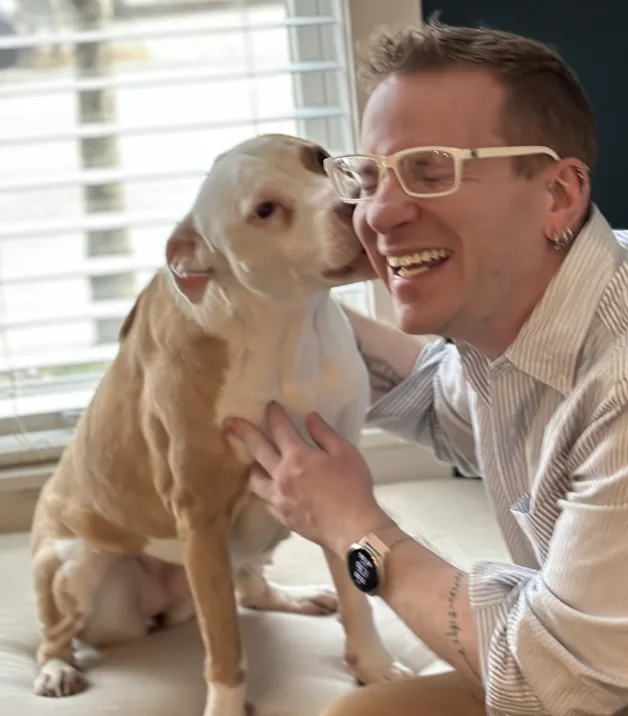
“With Seinfeld we’ve got recordings of performances and lots of information about how audiences responded. What can that information tell us what’s lost from ancient Roman comedy?”
What does a 2,000-year-old Roman comedy have in common with the 1990s sitcom Seinfeld? According to Wake Forest classics professor THM Gellar-Goad, quite a lot.
With support from the Wake Forest Humanities Institute’s Summer 2025 grant, Gellar-Goad recently completed a book that places ancient Roman comedy in conversation with one of television’s most famous shows. The project blends classical scholarship with modern pop culture, revealing surprising similarities in how humor works across centuries.
Gellar-Goad, a professor of Classics at Wake Forest, teaches Latin, Greek, and courses on ancient Greece and Rome in translation. Much of his scholarship focuses on Roman poetry and comedy. But the idea for this project began more than a decade ago, when he was invited to speak at a conference on Roman comedy and asked to address the topic of “reception”—the study of how elements of Greek and Roman culture appear in later works.
“I wasn’t really a specialist in reception,” he said. “So I was like, what on earth do I know that I can connect to Roman comedy? And I thought about it and made this connection with Seinfeld.”
The connection also had a personal origin. Gellar-Goad first watched the series in college with his husband and quickly became a devoted fan. Over the years, he revisited the show again and again. “I’ve watched the whole series five times,” he shared.
What began as a conference paper eventually grew into a short book, now under contract with Cambridge University Press as part of the Cambridge Elements of Greek and Roman Drama and Performance series. The Humanities Institute grant gave Gellar-Goad the time he needed to finish the manuscript.
“The grant was to give me the chance to just spend a couple of months dedicated to writing,” he said.
In the book, Gellar-Goad places Roman comedy and Seinfeld side by side, examining how both rely on similar comedic techniques. Rather than arguing that the sitcom directly borrowed from ancient plays, he uses each to shed light on the other.
“What I’m mainly doing is taking these two extensive bodies of comic literature and putting them in conversation with one another,” he said.
One technique he explores is “pseudo improvisation” when characters appear to be inventing dialogue on the spot, even though the scene is carefully scripted.
One example occurs when Jerry tries to convince an old high school rival that he fairly won a foot race years earlier. To prove it, Jerry recruits George to pretend they have not seen each other since high school when they meet at a coffee shop. But George quickly gets sidetracked, launching into an elaborate story about being an architect, while Jerry begins teasing him about it. The two end up arguing and nearly derail their entire plan, turning the scene into a chaotic back-and-forth that feels improvised even though it follows a script.
The comparison is especially useful because the two forms of comedy survive in very different ways. Ancient Roman comedies exist mostly as scripts, often without stage directions or details about performance.
“With Seinfeld we’ve got recordings of performances and lots of information about how audiences responded,” Gellar-Goad said. “What can that information tell us about what’s lost from ancient Roman comedy?”
To prepare for the project, Gellar-Goad rewatched the entire nine-season series with a researcher’s eye, cataloguing patterns in jokes, plot structures, and character interactions. “By the time I finished, I had about 18,000 words of notes,” he said.
Despite the analytical work involved, Gellar-Goad says the project was one of the most enjoyable he has written. “It was a lot of fun writing the book,” he said. “Some of the scenes I focused on were so hilarious.”
Gellar-Goad’s work proves that more than two millennia after Roman playwrights first staged their comedies, audiences are still laughing at many of the same techniques, whether they appear in an ancient theater or a New York coffee shop on Seinfeld.
Dr. Michael Grigoni
Interview by Madison Burba (WFU ’28)
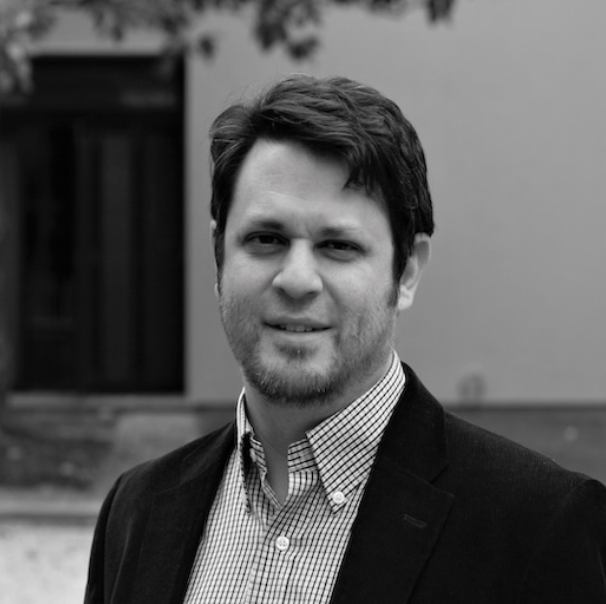
“I hope to open space for a more nuanced conversation about guns and religion in American life.”
A faculty member in Wake Forest University’s Department for the Study of Religions, Grigoni is using his Summer 2025 Humanities Institute Writing Grant to complete The Gun in American Christian Life: An Ethnographic Ethics, a book that examines how Christian belief shapes the lived realities of gun ownership in the United States.
His project sits at the intersection of religion, ethics, and everyday practice—but what sets it apart is how deeply embedded his research is in the lives of the people he studies.
“I entered doctoral studies wanting to do ethnographically grounded ethics,” Grigoni explained, emphasizing his desire to move beyond abstract theory and instead focus on lived experience.
That commitment led him to spend over a year conducting fieldwork with Christian handgun owners in central North Carolina. Rather than simply observing from afar, Grigoni immersed himself in the community: “I spent a year conducting participant-observation with Christian handgun owners, hanging out, interviewing, and learning to shoot with them.”
As part of this process, he even became a gun owner himself; an act he describes as necessary to doing ethnographic work “as immersively as possible.”
This level of participation allowed Grigoni to see beyond assumptions he initially carried into the project. One of the most surprising moments came when he encountered a concealed carry instructor who framed firearm use through a Christian lens.
Grigoni took the course twice and found an approach that challenged common stereotypes. Rather than encourage aggression, the instructor emphasized restraint: his approach was “very disciplined, and he drew on scripture to critique bravado and machismo.” More broadly, Grigoni observed that “among my interlocutors, Christianity seemed to play a restraining role in their gun carry,” complicating the idea that religion simply reinforces pro-gun attitudes.
Grigoni’s interest in this topic grew out of both personal and national contexts. During his PhD at Duke University, conversations about race and policing following the 2014 shooting of Michael Brown prompted him to consider the role of guns in American life.
At the same time, his move from the Pacific Northwest to the South exposed him to a different cultural landscape. As he began researching, he realized that “not much had been written about guns from a Christian ethical perspective,” motivating him to pursue the project.
Later in his fieldwork, Grigoni encountered a second community that would become central to his book: the Religious Coalition for a Nonviolent Durham. After attending a vigil for a victim of gun violence, he began studying the group, which hosts public vigils to “memorialize the loss of Durham residents to gun homicide.”
This experience introduced what he describes as “a different orientation to guns and gun violence by persons of Christian commitment.” His book ultimately places the two groups, the handgun owners and the vigil participants, in conversation, asking what one can reveal about the other.
Grigoni describes his project as “thoroughly interdisciplinary,” bringing together ethnography, social theory, and Christian ethics that “follows a recent turn to qualitative methods among Christian ethicists.”
Now under contract with Fordham University Press, the manuscript is nearing completion, and the Summer Writing Grant has played a key role in that progress, allowing Grigoni to “carve out space and time” during the long process of revising a dissertation into a book.
Ultimately, Grigoni’s work is grounded in a simple but demanding practice: listening. Whether in shooting ranges or at vigils, his research depends on careful attention to people whose perspectives may differ sharply from one another, and from his own.
“I hope to open space for a more nuanced conversation about guns and religion in American life,” said Grigoni.